Showing posts with label Sam Gold. Show all posts

Wednesday, April 24, 2019

King Lear


King Lear
Cort Theatre
April 23, 2019
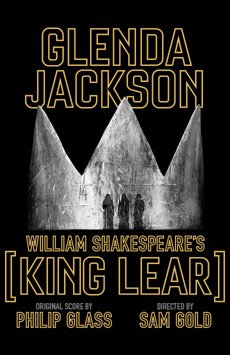
Photo courtesy of King Lear
I spent Shakespeare’s birthday watching Glenda Jackson perform the role of King Lear on Broadway.  It could not have been a better celebration.  Director Sam Gold brings the text to the forefront as he guides each actor to a deep understanding of what drives their character’s actions.  His casting is impeccable.  His grasp of effective timing is flawless.  The original music by Philip Glass enhances the build of action and calms the conflict, intensifying the emotional impact and pace of the production.  Glenda Jackson is majestic in her complex portrayal of the King. 

King Lear (played by Glenda Jackson) decides to split his kingdom among his three daughters.  Before he does, he asks each one to profess their love for him.  Goneril, the eldest (played by Elizabeth Marvel), is gracious and respectful.  Regan, the second daughter (played by Aisling O’Sullivan), poetically exceeds her sister’s pronouncements.  The youngest and favorite daughter, Cordelia (played by Ruth Wilson), is appalled by the insincere performances of her sisters, and answers truthfully and glibly.  This hurts and infuriates the King.  He disowns Cordelia and splits his kingdom in two among his ostensibly loyal and loving daughters.  The Earl of Kent (played by John Douglas Thompson) comes to Cordelia’s defense, and is immediately banished by the King.  Meanwhile, Edgar (played by Sean Carvajal) is planning on betraying his illegitimate brother, Edmond (played by Pedro Pascal) to remove him from the graces of their father, the Earl of Gloucester (played by Jayne Houdyshell).  The power struggle accelerates to full out war within the family, ending in devastating tragedy.

Glenda Jackson as King Lear
Photo courtesy of King Lear
The most dramatic and powerful scene is the blinding of the Earl of Gloucester by the Duke of Cornwall, Regan’s husband.  Aisling O’Sullivan drives this scene with fear and desperation, as her husband, played by Russell Harvard, pushes the action forward.  The scene is brutal and viscerally engaging.

One brilliant decision in double casting is that Ruth Wilson is playing both Cordelia and King Lear’s Fool.  Her vocal and physical characterizations in the contrasting roles are distinct and strong.  At one point she removes the wig she wears as the Fool.  It’s as if Cordelia is there with the King in his time of need when his other two daughters abandon and betray him.  This simple gesture speaks volumes to Shakespeare’s multi-layered theme of complicated family dynamic.

Ruth Wilson & Glenda Jackson
Photo courtesy of King Lear
The love triangle between Regan, Edgar, and Goneril is physically and sexually driven.  It feeds on the hunger for power these characters possess, which propels their action to their devastating downfall.  The battle that takes place between France and Albany as a result is simply and effectively staged.

King Lear is playing at the Cort Theatre through July 7.  Sam Gold has done an amazing job bringing Shakespeare’s themes to significant impact.  The entire cast is brilliant and powerful.  Glenda Jackson is magnificent.  Jayne Houdyshell is outstanding.  Get a ticket and see it for yourself.  

Domenick Danza

Sunday, August 13, 2017

Hamlet

Hamlet
The Public Theater
August 11, 2017
 
Photo courtesy of The Public Theater
Sam Gold has directed a bare bones production of Hamlet at The Public Theater that is accessible, riveting, and engaging.  He incorporates humor and song to render this tale of power, revenge, and madness into a story of human emotion and frailty.  The cast of nine are all in modern dress and double on a few roles.  The action builds from one act to the next, erupting to its fatal climax and tragic conclusion.

It is reported to the grieving Prince Hamlet (played by Oscar Isaac) that the ghost of his father, the King, has been seen roaming in the dark of night.  Hamlet seeks out the specter, who reveals that he was murdered by his brother, Claudius (played by Ritchie Coster), who now wears the crown.  This builds on Hamlet’s despair, since Claudius has already married Hamlet's mother, Gertrude (played by Charlayne Woodard).  Hamlet is obligated to take revenge.  His plot is a slow one, delayed by his need for proof of Claudius’ deed and his mother’s participation, and his desire to separate from his love, Ophelia (played by Gayle Rankin).

Charlayne Woodard & Oscar Issac
Photo courtesy of The Public Theater
Oscar Isaac’s Hamlet carefully figures out his plan while purposefully keeping the other characters at arms distance with a convincing act of madness.  His soliloquies transport the audience into Hamlet’s deeper layers of thought and emotion.  His Hamlet grows over the course of the play, coming to terms with his grief and desolation, and becoming keenly focused on his choices for action.  Charlayne Woodard’s Gertrude slowly draws the conclusion that Claudius murdered her husband.  Her physicality transforms as the realization becomes clear.  You see it in her eyes, especially in the way she looks at Claudius.  These small moments play powerfully and flip the action at unexpected moments. 

Mr. Gold juxtaposes the intensity of Laertes’ need for retribution and the heightened emotion of Ophelia’s mad scene with the slow build of Hamlet’s well thought out plan of revenge and act of madness.  Both depictions ring true, and serve two purposes.  It frames Claudius’ suspicion of Hamlet throughout the course of the play and also offers a visceral insight into Hamlet’s character and thought process.  Mr. Gold also does a stunning job of double casting.  Ritchie Coster plays both Claudius and the Ghost of King Hamlet.  His Claudius is presuming and cunning.  His King Hamlet is haunting and consumed.  There are a few scenes where he switches roles on the spot, which impressively make a strong statement.  Peter Friedman is cast as both Polonius and a Grave Digger.  He is witty and authoritative as Polonius, then, shortly after his murder, successfully hits the comic timing of one of the Grave Diggers. 

Oscar Isaac & Gayle Rankin
Photo courtesy of The Public Theater
Anatol Yusef is bold as Laertes.  His character maintains his composure and strength, then becomes overwrought with emotion at the murder of his father and suicide of his sister.  Gayle Rankin plays Ophelia’s mad scene to the max, conjuring a deep level of compassion and empathy.  Keegan-Michael Key is warm and charming as Horatio.  He is the window with which the audience enters the story, and the final voice of reason at the end.

Hamlet is playing at The Public Theater through September 3.  It runs four hours with two intermissions.  The journey is rich, truthful, and well worth every second.       


Domenick Danza

Sunday, May 21, 2017

The Glass Menagerie

The Glass Menagerie
Belasco Theatre
May 20, 2017

Photo courtesy of The Glass Menagerie
Tennessee Williams’ words ring powerfully clear and vigorous in Director Sam Gold’s stark and poignant interpretations of The Glass Menagerie.  It is truly breathtaking.  The bare stage magically lends itself to the illusion of memory that Mr. Williams poetically inspires.  The phenomenal cast draws you in and engages you on a profoundly emitonal level.

The stage is empty, except for a table and four orange chairs.  Tom (played by Joe Mantello) enters and tells us, “I have tricks in my pocket.  I have tricks up my sleeve.  But I am the opposite of a stage magician.  I give you truth in the peasant disguise of illusion.”  The truthful moments abound as Tom brings us deep into his intimate memory of the relationships and struggles between him and his mother, Amanda (played by Sally Field), and his sister, Laura (played by Madison Ferris).  He takes us back to the 1930’s “when the huge middles class of America was matriculating in a school for the blind.”  Amanda worries about Laura’s future.  She pays for her to go to business school, but due to Laura’s shy nature and social disability, she drops out.  Amanda convinces Tom to invite a friend from his factory job to dinner as a “Gentleman Caller” for Laura.  When Tom brings home Jim (played by Finn Wittrock), Laura is paralyzed with fear.  Jim charms her in a candle-lit scene that allows her to see herself truthfully.

Madison Ferris, Sally Field, & Joe Mantello
Photo courtesy of The Glass Menagerie
Joe Mantello’s portrayal of Tom is tender and troubled.  The love he feels for his sister and his mother is genuine, yet his need to escape the stagnation of his life in St. Louis is crushing.  The relationship between him and Sally Field’s Amanda is realistic in its fire and sensitivity.  These two actors are phenomenal in these roles.  The moment when Amada asks Tom to bring home a gentleman caller for his sister is heart stopping.  The scene between them when Tom explains how Laura is different than other girls is emotionally gripping.  Joe Mantello’s Tom is clearly his mother’s son, complete with a flair for the dramatics.  It is Tom’s need to break the intimate bond between these two characters that creates the main conflict of the play.  This is clearly defined and powerfully interpreted by these two stellar actors.  

Photo courtesy of The Glass Menagerie
Madison Ferris’ Laura is strong and stoic.  She uses her withdrawal as a means to find inner strength.  She is calm and resilient in the face of her mother’s disapproval and outlook.  Due to her physical disability, the care and patience she receives from her mother and brother become a driving force in the main conflict.  The continual provision of this care is of utmost importance to the both of them, yet their ability to maintain it is constantly in question.  The image used in the poster for this production, which is distinctly atypical, is perfectly chosen for Mr. Gold’s version of this play.  Instead of the usual representation of the fragility of Laura’s character, it symbolizes her strength and perseverance.

Photo courtesy of The Glass Menagerie
The description Tom gives of Jim as “the most realistic character in the play, being an emissary for a world of reality that we were somehow set apart from” is impeccably portrayed by Finn Wittrock.  He is energetic and optimistic, and turns the world of the play upside down.

Sam Gold made profound choices in his direction of this American classic that create a visceral experience beyond expectation.  The closing scene is hauntingly insightful.  Unfortunately, this astounding production ends its limited Broadway run on May 21. 


Domenick Danza

Sunday, April 2, 2017

A Doll’s House, Part 2

A Doll’s House, Part 2
Golden Theatre
April 1, 2017

Photo courtesy of A Doll's House, Part 2
What happens to Nora Helmer after she leaves her husband and children, closing the door behind her?  Playwright Lucas Hnath tells his rendition of that story in A Doll’s House, Part 2.  The play digs deeply into the institution of marriage, the value of opening old wounds, and the futility of walking away.  Directed by Sam Gold, the production has a stark coldness that effectively triggers emotional response and intellectual discourse.

There is a knock on the door.  Nora (played by Laurie Metcalf) returns after fifteen years.  She is greeted by Anne Marie (played by Jayne Houdyshell), the housekeeper who raised the children in Nora’s absence.  When Torvald (played by Chris Cooper) arrives home from work unexpectedly, Nora is forced to face him without much preparation.  She is there because Torvald neglected to give her a divorce, and Nora now finds herself in desperate need for that legal document to be filed.  Torvald refuses.  Anne Marie recommends that Nora seek the assistance of her daughter Emmy (played by Condola Rashad) in convincing Torvald.  Against her better judgement, Nora agrees.  Her discoveries are difficult, yet her determination is unwavering.

Laurie Metcalf & Chris Cooper
Photo courtesy of A Doll's House, Part 2
The scene between Nora and her daughter is stunningly written, directed, and performed.  Mr. Hnath sets up the character of Emmy as a mirror image of Nora.   She sees her younger self as headstrong and idealistic.  Condola Rashad masterfully propels the action of the scene deeper with impeccable timing, eye contact, and subtle gestures that reveal the character’s intellect and independence.  Laurie Metcalf matches this skill as she allows her character to face her deepest fear and speak without regret.  Mr. Gold uses level and body position in this scene, as he does throughout the production, to illustrate the power struggle between the characters.  The scene where Chris Cooper and Laurie Metcalf face off is riveting and direct.  Jayne Houdyshell rises up as she refuses to have Nora compare her actions to the choices Anne Marie has made.

Playwright Lucas Hnath
Mr. Hnath makes very bold statements in his well-structured and skillfully crafted play.  When Nora returns, she speaks at length about the detriment of the institution of marriage.  This resonates with irony and humor against the political changes in legal marriage over the past few years.  Torvald explains how instead of leaving the marriage after her “epiphany,” she should have stayed to work it out with him.  By expressing this we see how Torvald has grown over the years.  With this concept of marriage as a challenging negotiable partnership juxtaposed against the one earlier expressed by Nora, we get an alternate view of Ibsen’s independent heroine through the lens of the adaptability of the characters she left behind.  In the closing scene we are compelled to ask ourselves where to look for evidence of the changes we seek in the world.

Presently in previews at the Golden Theatre, A Doll’s House, Part 2 opens on April 27 and runs for a sixteen week limited engagement.  It is relevant and absorbing.  See it for yourself. 


Domenick Danza